


Jana Shiha is SquashTV’s first regular Egyptian on-air talent, a remarkable stat given her nation’s dominance in squash. A former World Junior Finalist, she brings a wealth of knowledge about Egyptian squash to the table. She’s the only one on the comms team that consistently pronounces Egyptian names correctly. But it must be said that, in her first two appearances as a broadcaster—at the Tournament of Champions and the El Gouna Open last season—her effectiveness stopped there. In commentary, she was out of her depth, her comments boilerplate—“crucial point here” and “trouble”—delivered uneasily. In the studio, she was prone to rambling and losing her train of thought. More than once, she stopped herself mid-sentence: “What was I saying?” The 25-year-old Egyptian has no PR or broadcasting experience: why hadn’t the PSA started her on smaller events first to get her sea legs? Instead, she was thrust into live-match commentary, post-match interviews, and studio punditry—all distinct skills—on the sport’s biggest stages. Shiha represented an important inclusion in SquashTV, but the reality was, she wasn’t ready.
She’s developing fast. At the World Championships, she showed signs of relaxation, even more so at the Qatar Classic last week, where she landed most of her points. But it was in fact her rough edges, buoyed by a growing confidence, that made her essential viewing. She does not mince words, saying she finds non-Egyptian match-ups “boring,” and called most Malaysian players “skillful, but passive,” getting away with both comments because they read as deliberately arch. Shiha understands that punditry is performance; indeed, she’s said as much—“it’s a bit like being an actress without being an actress,” she told SquashSite recently—and it’s good to see her now leaning into the role of agitator. Though she’s since moved back to Egypt, she spent her formative years in New York and brings to the studio a New Yorker’s fast-talking directness. “Fire in the studio,” Johnny Williams announced at one point. “Jana: the Devil Wears Prada.” Shiha grinned. “I’ll take it. I look good, feel good.” (Shiha, a self-avowed clotheshorse, is always immaculately dressed and bejeweled.)
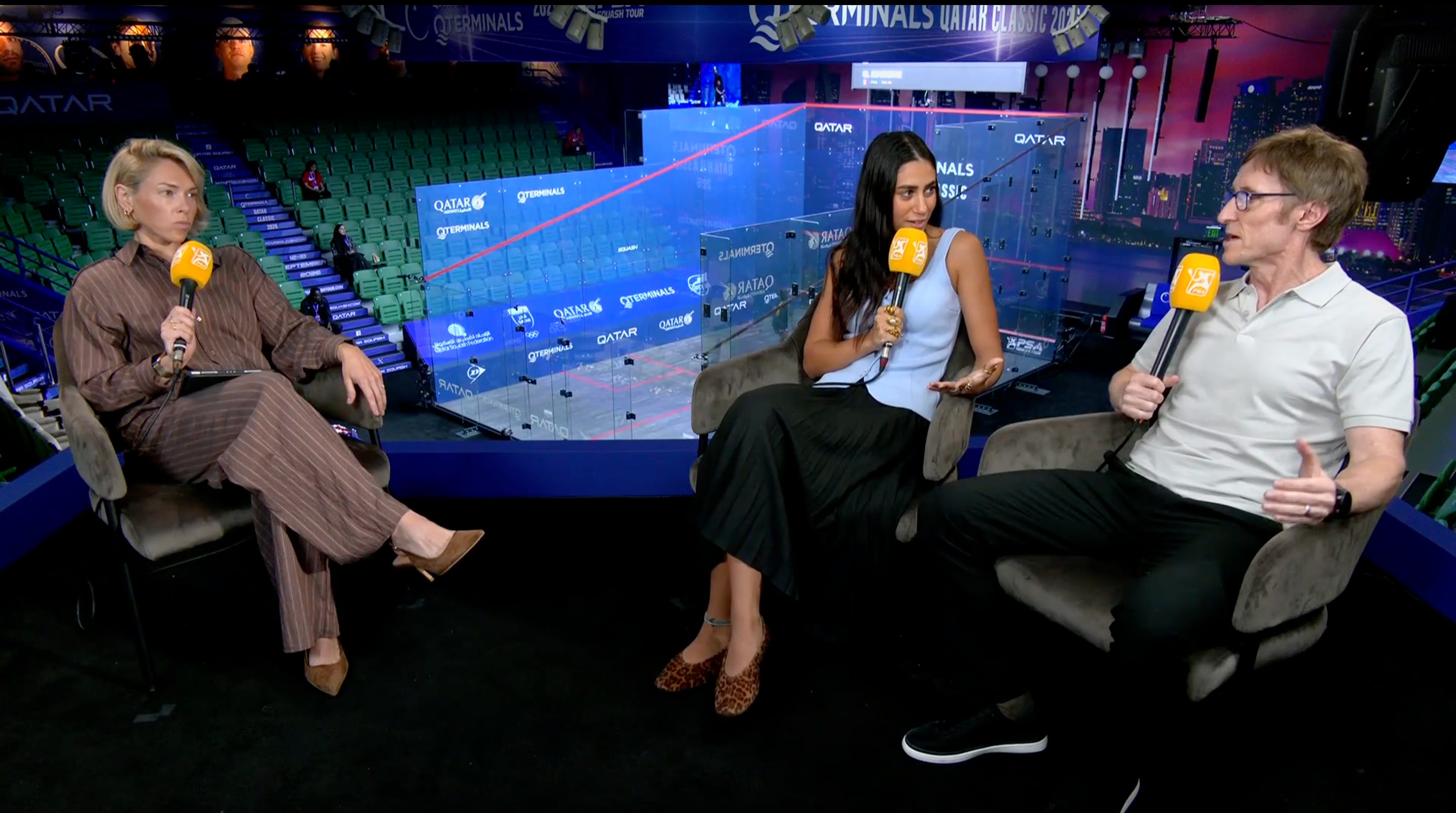
In Qatar, she was given ample opportunity to agitate. First came the Round 2 match between Nouran Gohar and Malak Khafagy, 91 minutes of unadulterated chaos that included several injury breaks and 53 decisions, the majority of which dubiously penalized Khafagy. With new directives from the WSO, there are reasons to be hopeful about the state of officiating going forward—but let’s be honest, it was a very bad day for referee Kellvintra Selvaraj and VR Jason Foster, and Shiha was right to be incensed. She suggested that, in the face of repeated officiating failures, refs should be swapped out mid-match. Williams looked blindsided by the suggestion and quickly put cold water on it. I don’t think the solution is viable—the few refs we have are under enough pressure as it is—but what struck me was the originality of the idea; it threw into relief how tired many of the debates around refereeing have become. Williams went on to say what we really need is referee performance reviews, to which Shiha shot back, “You’ve said that a million times. Nothing has changed.” To Lisa Aitken’s suggestion that players may also bear responsibility, Shiha lolled her head to the side. “Is it the chicken, is it the egg? No one cares. We just need a solution.”
No doubt Shiha benefited enormously from regularly being teamed with Williams and Aitken: Shiha the agitator, Williams the straight man, Aitken the warm, amused conductor—still SquashTV’s MVP. Aitken was smart to let Shiha rip; she knows how vital a young and irreverent voice in the studio is—especially next to Williams, whose principal strength is in commentary. Aitken and Shiha, especially, have a charming repartee. It was easy to imagine them going for drinks after the show.
Shiha was at her most entertaining, and challenging, during the tournament’s central drama. After Mostafa Asal blatantly grabbed Aly Abou Eleinen’s arm in the quarter finals, it was Shiha—who grew up on the junior circuit with Asal and considers him a friend—who confronted him courtside. “We need to talk about the hand grab,” a bluntness that should be commonplace when the World #1 plays dirty but is sadly in short supply. She asked what he believed his responsibility as World #1 to be and pressed him again on the point in his disastrous interview the following morning, which saw Asal continue to evade and change his story about the hand grab for the third time in less than 24 hours. “It was just a balance thing,” he said, admitting the incident looked “really bad” in slow motion but not if you “make it fast.” Asal cut Shiha off twice as she tried to ask a question—she turned to the camera, wide-eyed, then looked down at her lap, barely suppressing a laugh as Asal continued to dig himself into a deep hole. Both Williams and Joey Barrington lamented James Willstrop’s absence at the tournament, Asal’s coach and moderating influence, to which Shiha asked: “Why does a 25-year-old man need a coach to tell him not to grab his opponents’ hand?” (Asal is now under investigation for a host of offenses, including unsportsmanlike conduct, unprofessional conduct, and aggravated behavior.)
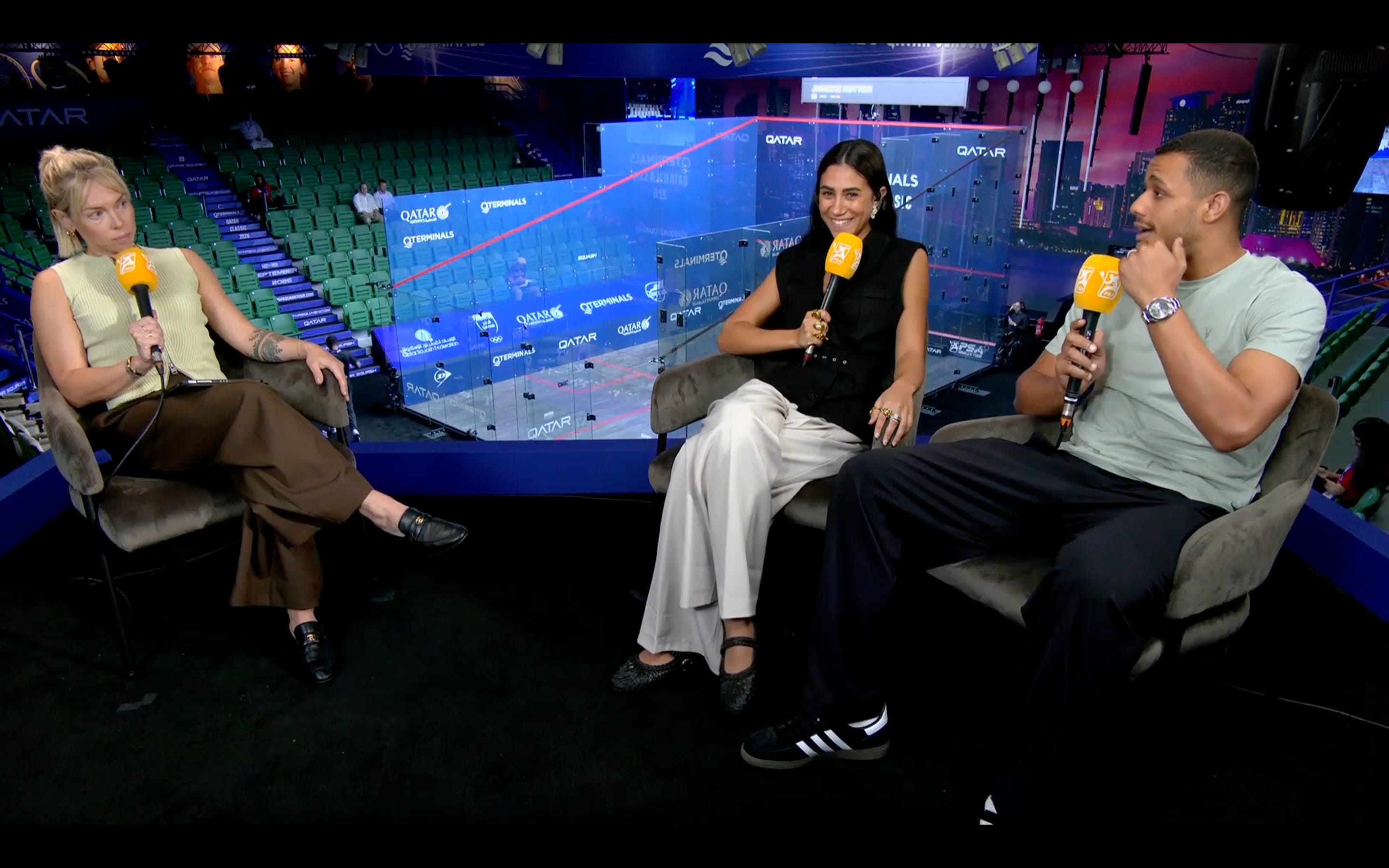
Shiha can still improve as a commentator—she has not quite found her own language for live-match analysis. But few on SquashTV nail the demands of every role, and it could be that she needs the camera—and drama—to thrive. So be it. I don’t wish for more controversy for our sport, but when it comes, there’s currently no one better to meet a contentious moment than Shiha.
Great article! And I really agree, she was a breath of fresh air (even though I genuinely enjoy most of the SquashTV team)
A very enjoyable read - thank you!